This is the NeXT computer displayed at CERN in Geneva as the world’s first Web server, associated with Tim Berners-Lee. At the end of 1990, a NeXT workstation at CERN hosted the first website, info.cern.ch, and by Christmas that year Berners-Lee had the first browser/editor and server software working.
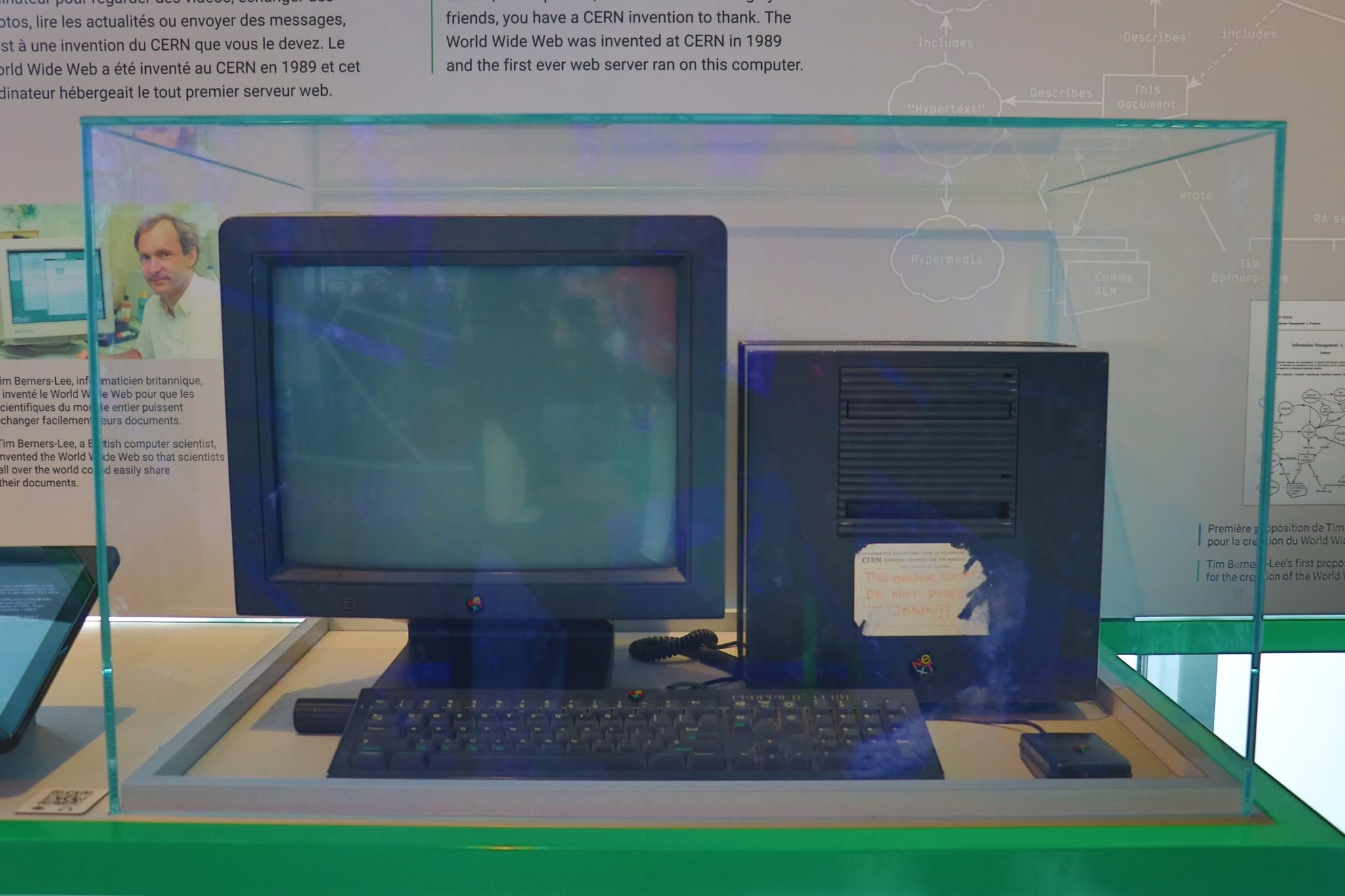
So this is not just an old computer behind glass. It is one of the things that gave life to the web: the beginning of an invisible infrastructure that would connect people, organizations, images, texts, archives, and thoughts. A black computer from which one of the greatest transformations of the modern world began.
CERN itself is now in another pause. The LHC (Large Hadron Collider) was stopped at the end of June 2026 for “Long Shutdown 3,” a major upgrade that will last several years and prepare it for the High-Luminosity LHC. The last comparable shutdown was roughly between 2018 and 2022, so this is one of those rare moments when the machine steps out of time for a while, in order to come back changed.
At CERN, the work is about looking as closely as possible at the seen world, until it begins to reveal more of the invisible rules beneath it. By making particles collide at extraordinary energies, scientists try to glimpse conditions close to what they believe the universe may have been like in its earliest moments, shortly after the Big Bang. From these traces, they study the Higgs boson, look for possible signs of dark matter, explore the imbalance between matter and antimatter, and more. It is a place where the smallest fragments of reality are asked the largest questions: what is matter, where does mass come from, and what else may be hidden inside the world we think we know?